Skip to content

Translated Article

What Tor VPN Beta's first year looks like across seven Asia-Pacific regions

This post builds on the Tor Project announcement below. We also publish full translations of it:

Tor VPN beta promotional image showing availability on download.torproject.org with F-Droid and Google Play badges, and a phone displaying the connected screen with upload and download counters

The Tor Project's retrospective on the first year of Tor VPN Beta contains one finding that reframes the whole product. The team expected to learn from real-world use, and what they learned was that the primary use case is unblocking the internet — not the privacy features a commercial VPN would lead with. Early adoption concentrated in heavily censored regions, and that shaped what got built next.

That finding is the interesting part for us, a community based in Taiwan, because the regions we cover sit at very different points on that spectrum. This post checks the announcement against measurement data for seven Asia-Pacific regions, and sets out what the regulatory picture looks like in each.

Snowflake gets a dedicated app, and the volunteer pool grew 29% in a month

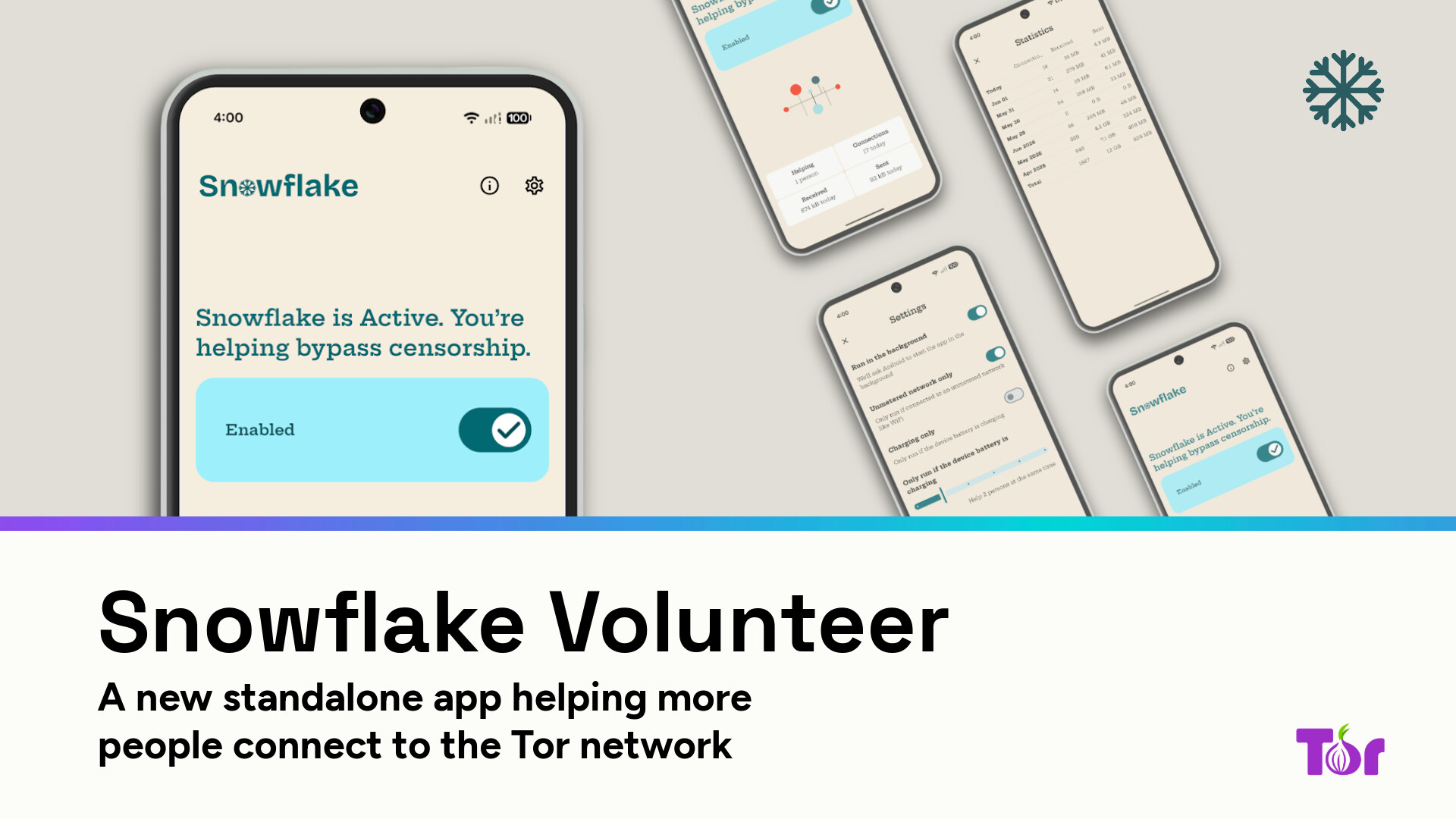
Snowflake Volunteer promotional graphic showing several phone mockups of the app's enable toggle, settings screen, and statistics screen
Image source: Tor Project Blog.

We've written before that Snowflake is the lowest-barrier way to help people reach Tor: open a browser tab, leave it running, and you're relaying anonymous traffic. On 3 August, Tor Project lowered that barrier again with Snowflake Volunteer, a standalone Android app whose only job is being a Snowflake bridge.

Defending the Public's Right to Know: A Sinophone Asia-Pacific Reading of OONI in Practice

This post sits alongside Tor Project's spotlight series article on OONI. The body below summarises what the original covers and then maps the same workflow onto Sinophone Asia-Pacific — the section the original does not cover, and the main contribution of this post.

For the full narrative on Kenya's High Court case, Tanzania's follow-up litigation, Meduza's public-education framing, and the supporting cases from Egypt, Jordan, and India, please read the original:

Visual header for the Tor Project 'Defending the free internet' spotlight series, featuring OONI
Image source: Tor Project Blog.

Section 702 Has Expired: A Sinophone Asia-Pacific Read on Warrantless US Surveillance

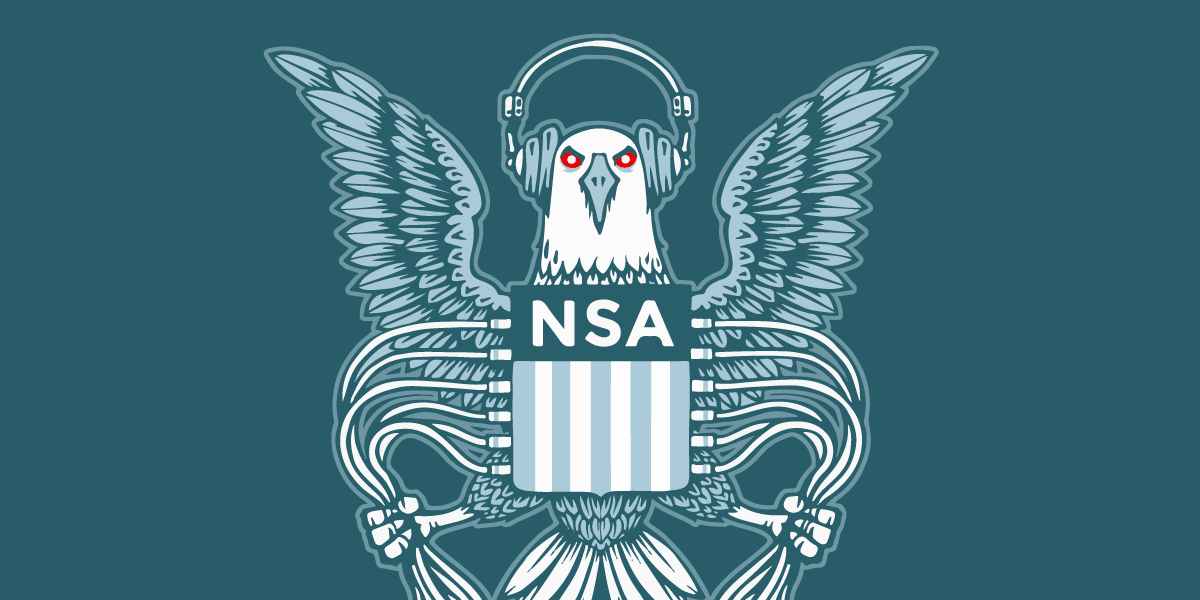
EFF's NSA eagle graphic, reworking the NSA seal into an eagle plugging its talons into telecom lines, representing warrantless mass surveillance
Image: EFF designer Hugh D'Andrade's "NSA eagle," which reworks the NSA seal into an eagle plugging its talons into the nation's telecom lines. From EFF's NSA spying work, licensed under CC BY 4.010.

This post is an anoni.net reading based on the EFF Deeplinks article:

At midnight on 12 June 2026, Section 702 of the Foreign Intelligence Surveillance Act lapsed1. EFF, which spent years arguing the program should require a warrant before the FBI reaches Americans' communications — or else expire — calls the lapse a victory1.

It is a real victory, and a narrow one. Section 702 was always built to collect the communications of non-US persons located abroad. That means everyone outside America — including readers in Taiwan, Hong Kong, mainland China, Macau, Singapore, and Malaysia — has always been a lawful target of this authority. The fight that just lapsed it was overwhelmingly a fight about protecting Americans. For the rest of us, the lapse changes much less than the headline suggests.

Editorial note: This is a companion post for English-speaking readers. The original article, by Maria Xynou (OONI), was published on the Internet Society Pulse blog and reposted on OONI's blog. Please read it there. anoni.net Docs is reposting a short summary here, alongside translations into Traditional Chinese and Simplified Chinese, plus a regional context section for readers in Chinese-reading regions.

What the original article covers

Maria Xynou's post is a concise overview of how Internet censorship is becoming harder to measure, and what OONI's data shows about how it is evolving. The main points:

  • Censorship is rarely binary: Confirming a block is not just "up" or "down". False positives are common, methods range from DNS manipulation and IP blocking to throttling and forged responses, and the same site may be blocked on one network but reachable on another.
  • OONI's approach: Open measurement methodologies, control measurements, a probabilistic pipeline (OONI Pipeline v5) that classifies results as "blocked", "down", or "OK" with confidence estimates, and crowdsourced data from volunteers running OONI Probe on their local networks.
  • Seven evolving trends: Globalization and normalization of censorship beyond the usual suspects, short-term targeted blocks around political events, long-term systemic suppression of marginalised communities, less transparent censorship in an encrypted web (TLS interference via DPI, no block pages), throttling and degraded service as subtler control, attacks on privacy technologies (encrypted DNS, ECH), and the rise of national intranets and allowlisting approaches.
  • Measurement enables advocacy: OONI has been part of the #KeepItOn campaign since 2016, and OONI data has supported legal and policy interventions in Gabon, Tanzania, Nepal, Togo, Mozambique, Pakistan, Kenya, and others.
  • Scale: Over 3 billion measurements from 30,000 networks across 245 countries and territories since 2012, with tens of millions of new measurements added every month.

Please read the original for the full argument, all the supporting links, and the country-specific examples:

Financial Companies as Censors: A Sinophone Asia-Pacific Reading of EFF's Transaction Denied

A piggy bank with its mouth taped shut, representing payment rails severed by financial intermediaries
Image from EFF Deeplinks article Former EFF Activism Director's New Book, Transaction Denied, Explores What Happens When Financial Companies Act like Censors (EFF Financial Censorship banner library), licensed under CC BY 4.0.

On 9 May 2017, the cross-border electronic payment service PayPal closed all domestic transaction functions in Taiwan. Two PayPal Taiwan accounts could no longer send money to each other. Cross-border transfers kept working. The streamer economy took the worst hit. Twitch Cheer, YouTube Super Chat, StreamLabs, and NightDev — tools that processed local audience tips through PayPal — went dark on the same day. Small organizations and independent media that relied on PayPal for domestic flows lost a payment rail overnight8.

The legal trigger was Article 3, Paragraph 1 of Taiwan's Electronic Payment Institution Management Act, passed in 2015. PayPal chose not to apply for a license and closed domestic functions instead9. Nearly nine years later, the U.S. online payment processor Stripe still does not allow individuals or companies in Taiwan to register. Stripe is the credit card collection layer behind Substack, many subscription SaaS products, and many open source sponsorship pages. Individual creators in Taiwan have to first register a U.S. LLC to use it10.

In Taiwan's payment conversation, these two facts have usually been filed under "compliance trade-offs" or "market size." EFF's former Activism Director Rainey Reitman, in her April 2026 book Transaction Denied12, compiles cases from 2012 onward across the U.S. and the Middle East. Stacked together, the cases reveal a cross-region, cross-issue pattern that's been running for more than a decade. Taiwan's two events belong in that record. So do parallel events from Hong Kong, mainland China, Macau, Singapore, and Malaysia, which Reitman's book — focused on U.S. and Middle Eastern material — does not yet cover.

What the Tor VPN security audit means for Taiwan's privacy community

This post is based on the Tor Project announcement:

TorVPN Cure53 Audit

In June 2025, Cure53 completed a penetration test and source code review of TorVPN for Android and its underlying Rust networking layer, Onionmasq. The Tor Project published the results in April 2026. The headline finding: Tor's core tunnel establishment and routing logic held up well. But there are specific technical issues worth understanding if you're recommending or deploying this tool in Taiwan's context.