The docs site is written for people new to anonymity networks and privacy, who may not yet know what Tor is. Posts that only make sense once you know Tor, cryptography or network measurement have moved to the new Articles section on the anoni.net home site. From now on this blog carries translations, analysis and regional observations written for a general audience.
From now on the docs blog carries translations, technical analysis and regional observations only. The 31 posts about events, project launches, progress reports and the community's positions have moved to the community updates on the home site, which is also where future community announcements will appear.
A wallet, a phone and keys, standing in for a registration that swaps the phone number for a payment and a key. Photo by Towfiqu barbhuiya on Pexels (Pexels License).
In Taiwan, Hong Kong and Macau, every mobile number, prepaid SIMs included, is registered to a real identity, and the same holds across most of East and Southeast Asia. A Signal account is opened against a phone number, so however strong the encryption, the carrier's registration record ties the account to a named person. For journalists' sources, activists working across borders, and anyone who does not want their account traced back to them, the phone number has long been the most cited limitation of Signal.
In September 2026 Signal's Android beta opened a way to register without a phone number, called Signal Login, in exchange for a small one-time payment. The obvious worry followed: doesn't the payment record bring your identity right back? Signal reuses the zero-knowledge credentials from its donation system so that an account cannot be matched to a specific purchase. The payment date still travels with the account, however, and Google keeps a record that you bought it. Whether to use Signal Login, and how to pay, depends on which kind of tracing you need to defend against.
The previous release went out on 2 September. Between then and the 20th, the docs site merged 140 pull requests. The Lab went live, the utilities grew from 9 tools to 15, nine worked examples string those tools into paths you can follow end to end, a settings drawer collects controls that used to be scattered, and the surveillance page gained a fifth tier. On the content side, three regional pages went up, one of them taking forty-nine public sources to pull apart identity binding and the data market beside it. The last two sections are for readers who acted on the old guidance.
On 10 September 2026 Anthropic published Detecting and countering misuse of AI: September 20261, a 154-page account of misuse it detected and disrupted between December 2025 and August 2026. The report is English-only and our community does not have the capacity to translate it in the near term, so we took on something smaller: a complete write-up of the sections that involve Taiwan and the Chinese state, each marked with its page number so readers can check the original.
The sections below aim to give readers who never open the report the full picture rather than fragments. Tables, figures and terminology follow the original as closely as possible.
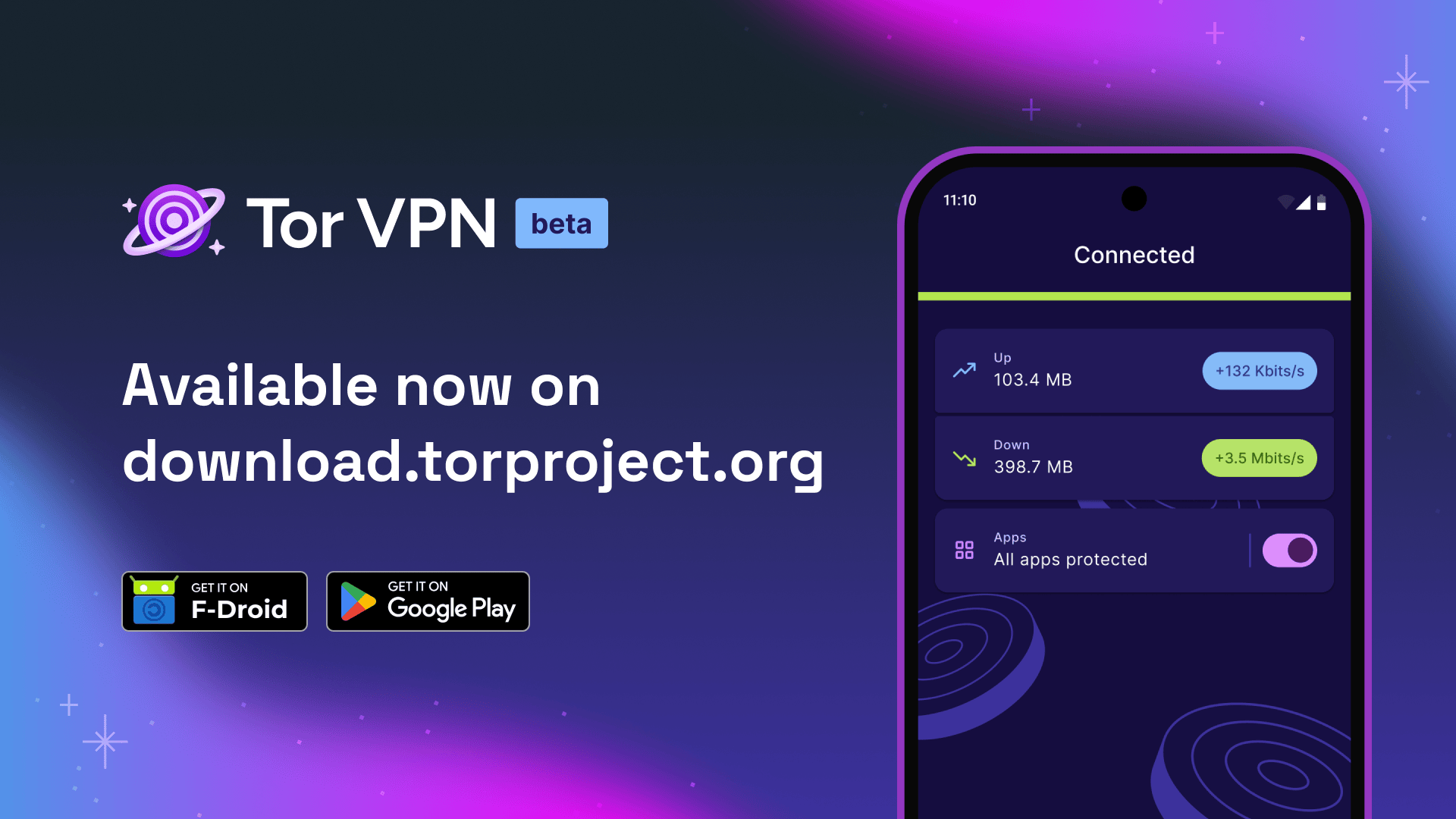
The Tor Project's retrospective on the first year of Tor VPN Beta contains one finding that reframes the whole product. The team expected to learn from real-world use, and what they learned was that the primary use case is unblocking the internet — not the privacy features a commercial VPN would lead with. Early adoption concentrated in heavily censored regions, and that shaped what got built next.
That finding is the interesting part for us, a community based in Taiwan, because the regions we cover sit at very different points on that spectrum. This post checks the announcement against measurement data for seven Asia-Pacific regions, and sets out what the regulatory picture looks like in each.
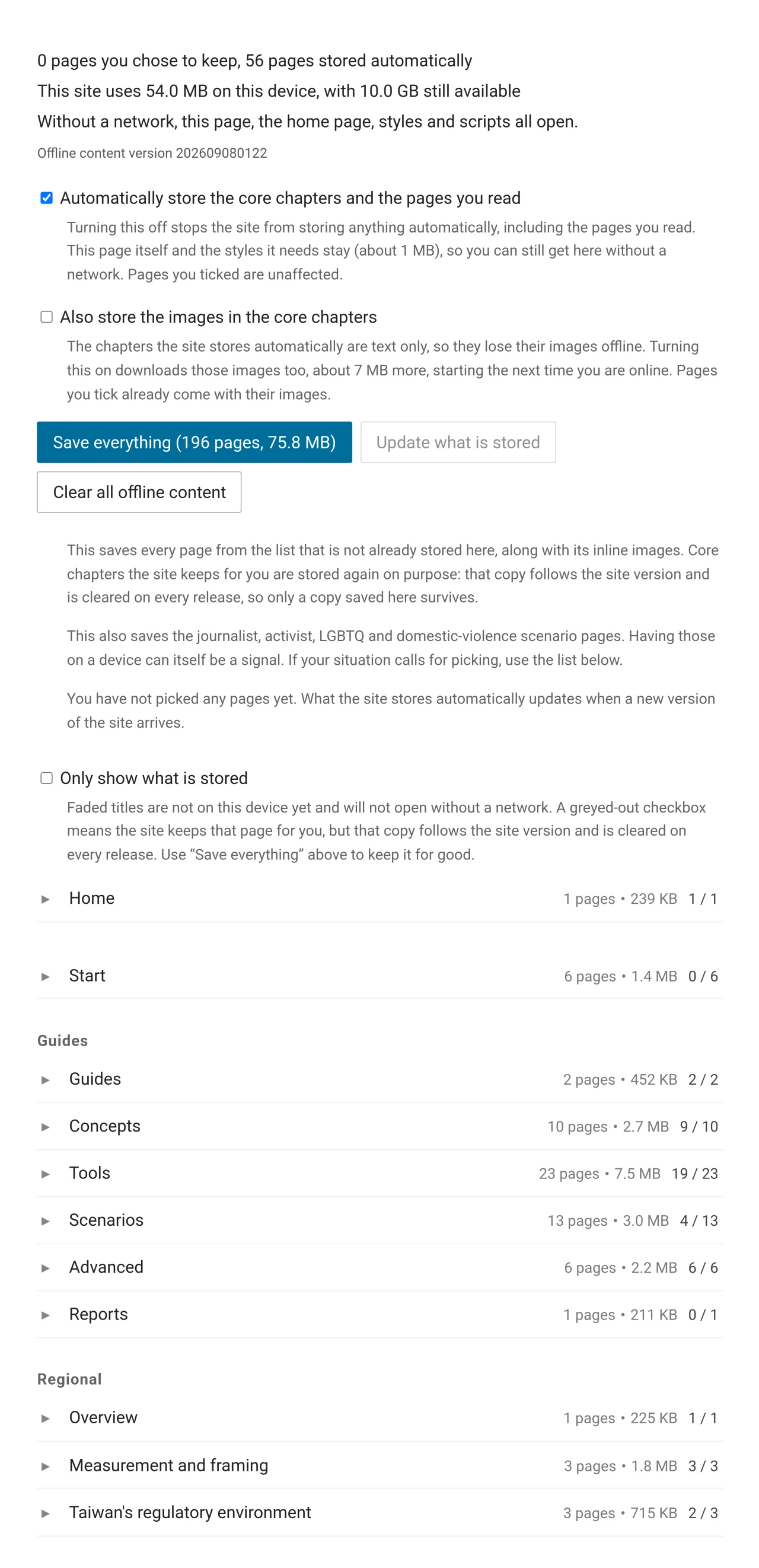
When the network drops, the page you most need is often the one that will not open. On a flight, in the mountains, or in a new country before you have found a SIM, that is an inconvenience. Where the network is cut, throttled or blocked, the same situation costs far more.
From 4 to 6 September we were at Global Gathering 2026 in Estoril, Portugal. Alongside our booth on the last day we joined the Circles, where we talked about how the privacy material on the docs site is written and layered. The conversation kept returning to one premise: the moment a reader needs these pages is not reliably a moment with a working connection.
We are a group of volunteers working on anonymity networks and internet freedom, based in Taiwan. We maintain this documentation site, a practical guide to privacy and anonymity sorted by scenario for everyday life, sensitive work and high risk.
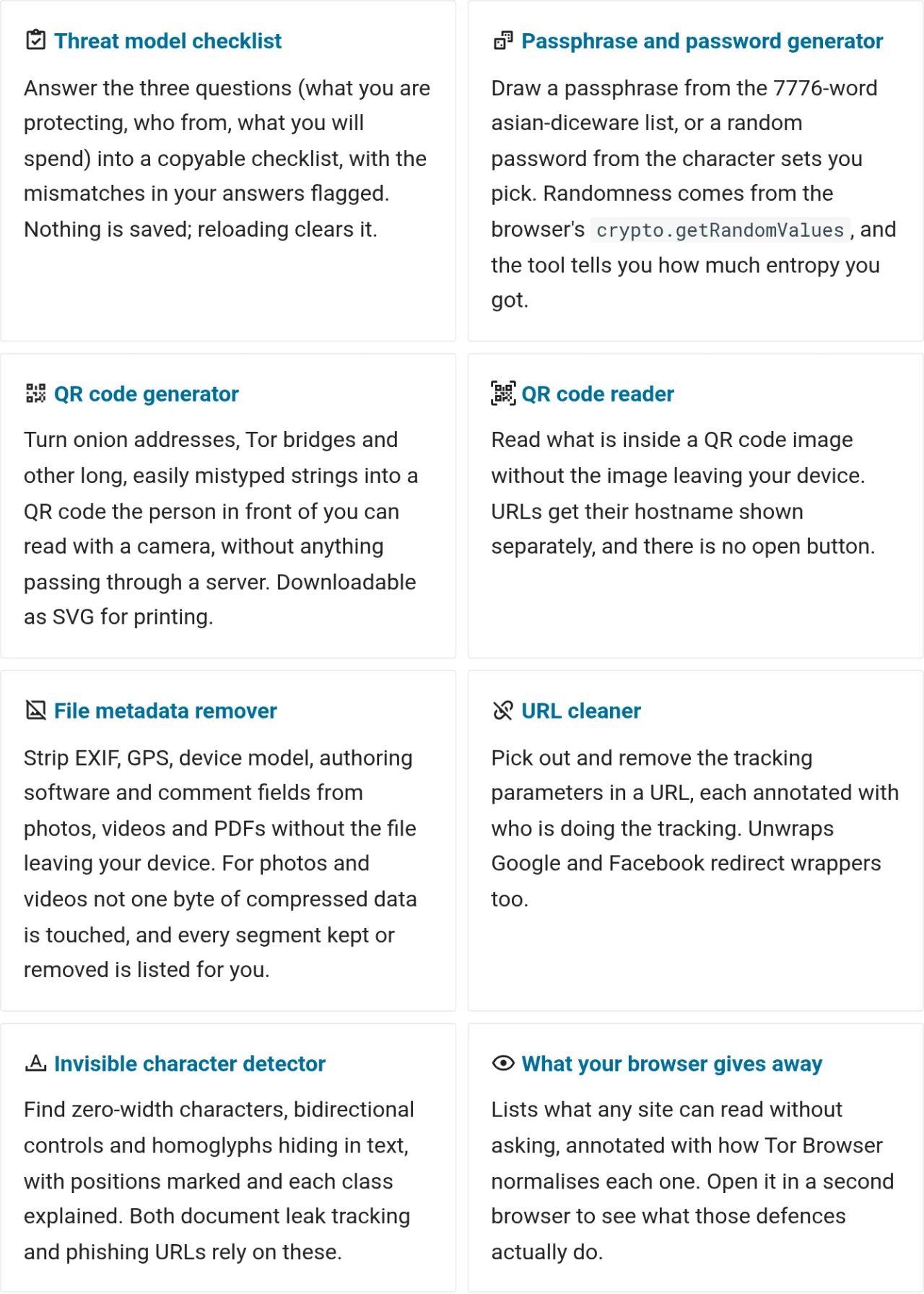
The articles on this site explain how to protect yourself. The tools section holds the things you can actually press. All eight compute in the reader's browser, send nothing anywhere, and keep working with the network off once stored on a device.
Several pages changed over the past two weeks, and in most cases the change was to withdraw a passage rather than extend it. Hong Kong moved from medium to high risk for device inspection, the exemption for eSIMs bought outside Japan came out, a 2FA app we recommended turned out to have changed owners, and a blocking distribution drawn from 40 samples was recomputed over all 22,105. The site merged 50 pull requests between 27 July and 10 August, and a sizeable share of them went into corrections of this kind. What follows is page by page: what changed, what the evidence was, and a checklist in the middle for anyone who already prepared using the old guidance.
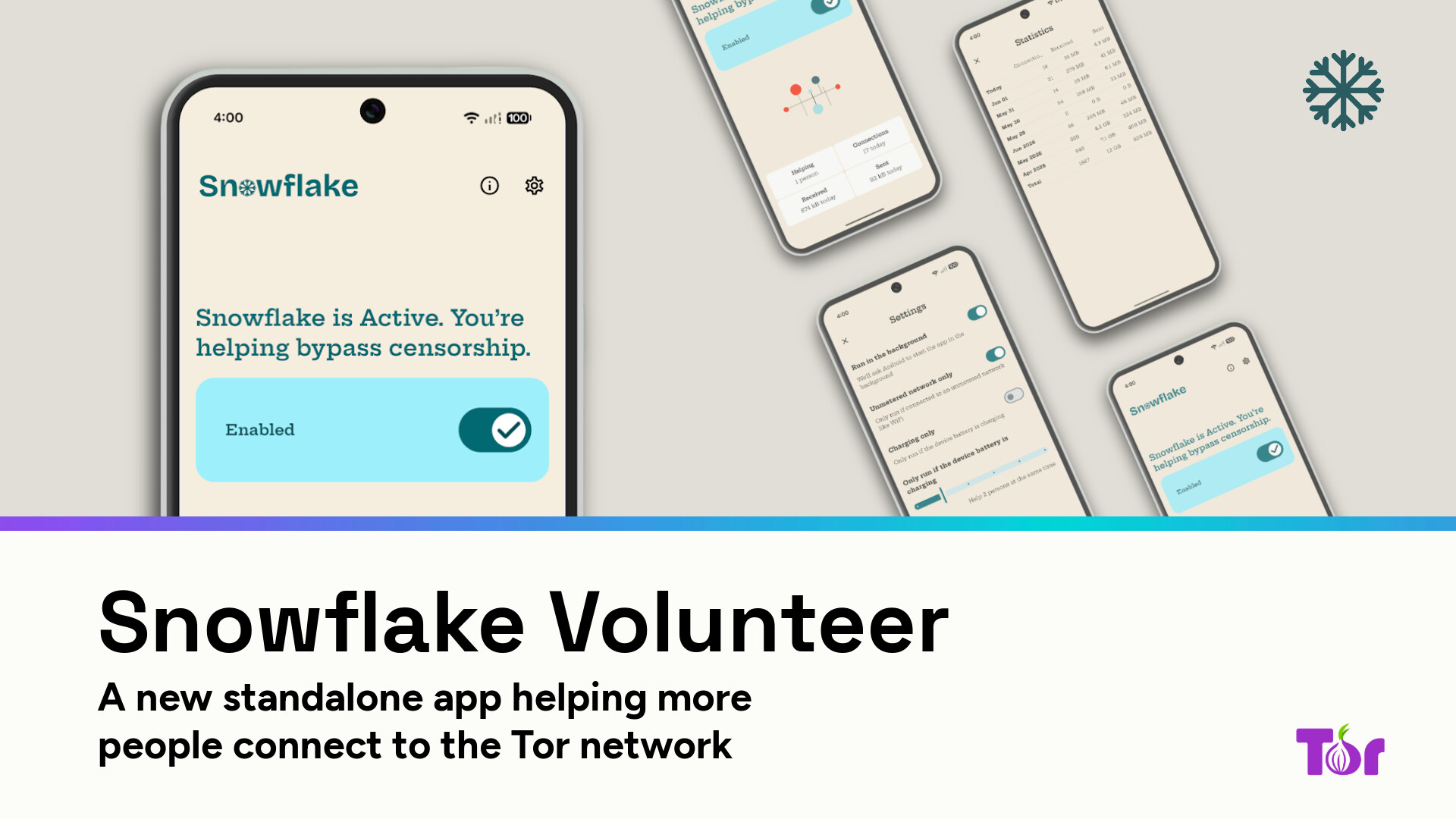
We've written before that Snowflake is the lowest-barrier way to help people reach Tor: open a browser tab, leave it running, and you're relaying anonymous traffic. On 3 August, Tor Project lowered that barrier again with Snowflake Volunteer, a standalone Android app whose only job is being a Snowflake bridge.