The previous release went out on 2 September. Between then and the 20th, the docs site merged 140 pull requests. The Lab went live, the utilities grew from 9 tools to 15, nine worked examples string those tools into paths you can follow end to end, a settings drawer collects controls that used to be scattered, and the surveillance page gained a fifth tier. On the content side, three regional pages went up, one of them taking forty-nine public sources to pull apart identity binding and the data market beside it. The last two sections are for readers who acted on the old guidance.
On 10 September 2026 Anthropic published Detecting and countering misuse of AI: September 20261, a 154-page account of misuse it detected and disrupted between December 2025 and August 2026. The report is English-only and our community does not have the capacity to translate it in the near term, so we took on something smaller: a complete write-up of the sections that involve Taiwan and the Chinese state, each marked with its page number so readers can check the original.
The sections below aim to give readers who never open the report the full picture rather than fragments. Tables, figures and terminology follow the original as closely as possible.
The Tor Project's retrospective on the first year of Tor VPN Beta contains one finding that reframes the whole product. The team expected to learn from real-world use, and what they learned was that the primary use case is unblocking the internet — not the privacy features a commercial VPN would lead with. Early adoption concentrated in heavily censored regions, and that shaped what got built next.
That finding is the interesting part for us, a community based in Taiwan, because the regions we cover sit at very different points on that spectrum. This post checks the announcement against measurement data for seven Asia-Pacific regions, and sets out what the regulatory picture looks like in each.
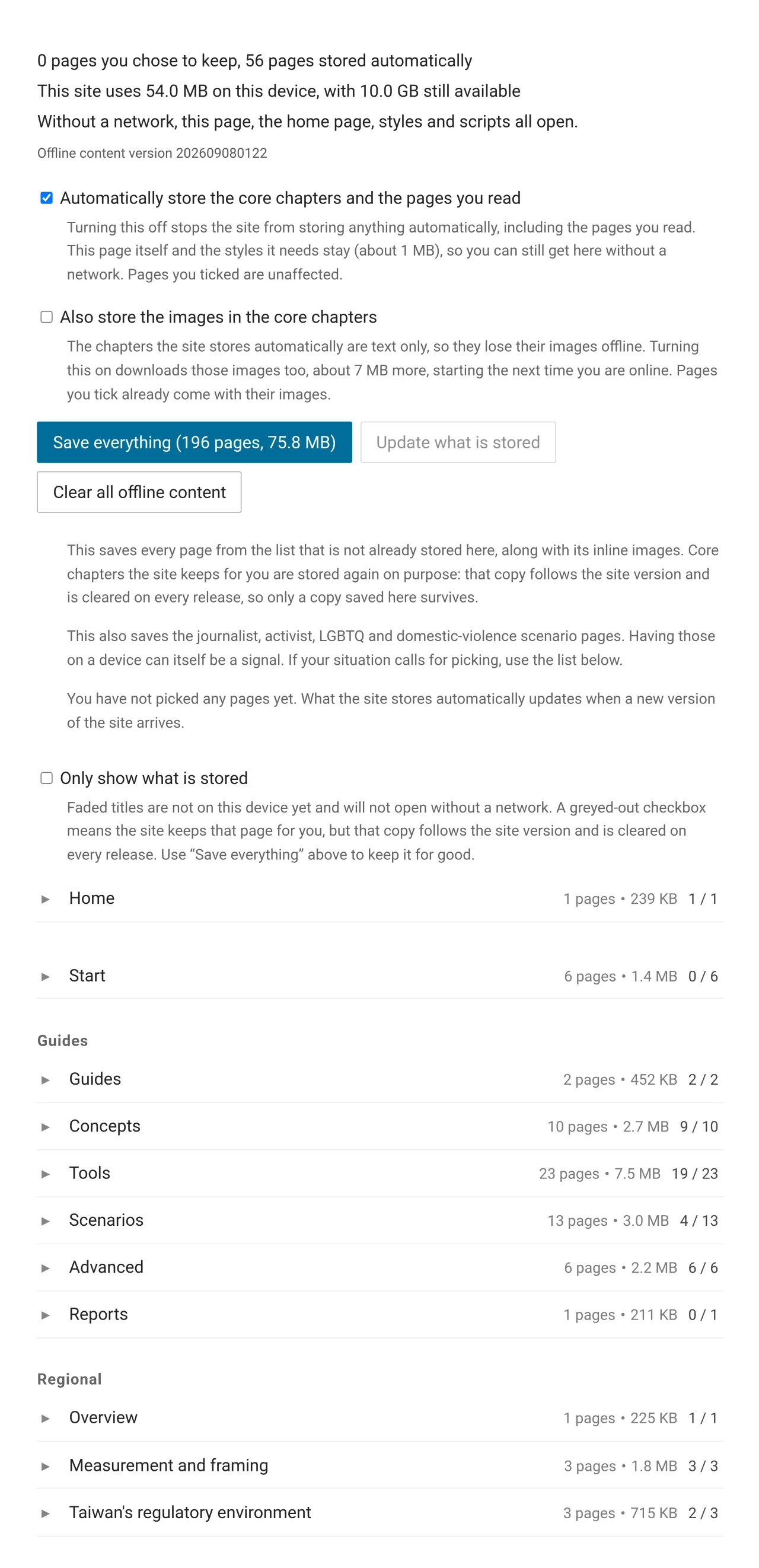
When the network drops, the page you most want to open is often the one that will not open. On a flight, in the mountains, in a new country before you have found a SIM, that is an inconvenience. Where the network is cut, throttled or blocked, the same thing costs something else entirely.
From 4 to 6 September we were at Global Gathering 2026 in Estoril, Portugal. Alongside our booth on the last day we joined the Circles, where we talked about how the privacy material on the docs site is written and how it is layered. The conversation kept returning to one premise: the moment a reader needs these pages is not reliably a moment with a working connection.
We are a group of volunteers working on anonymity networks and internet freedom, based in Taiwan. We maintain this documentation site. The community also built asian-diceware, a 7,776-word English passphrase wordlist that drops straight in for the EFF Large Wordlist, with one difference: it pins 292 Asian loanwords that English dictionaries already carry. tofu, oolong, boba, and kimchi are all in there.
The tool page already covers how to use it, and the passphrase generator in the tools section is one click away. This post covers the other half: how the words were picked, and what got rejected along the way.
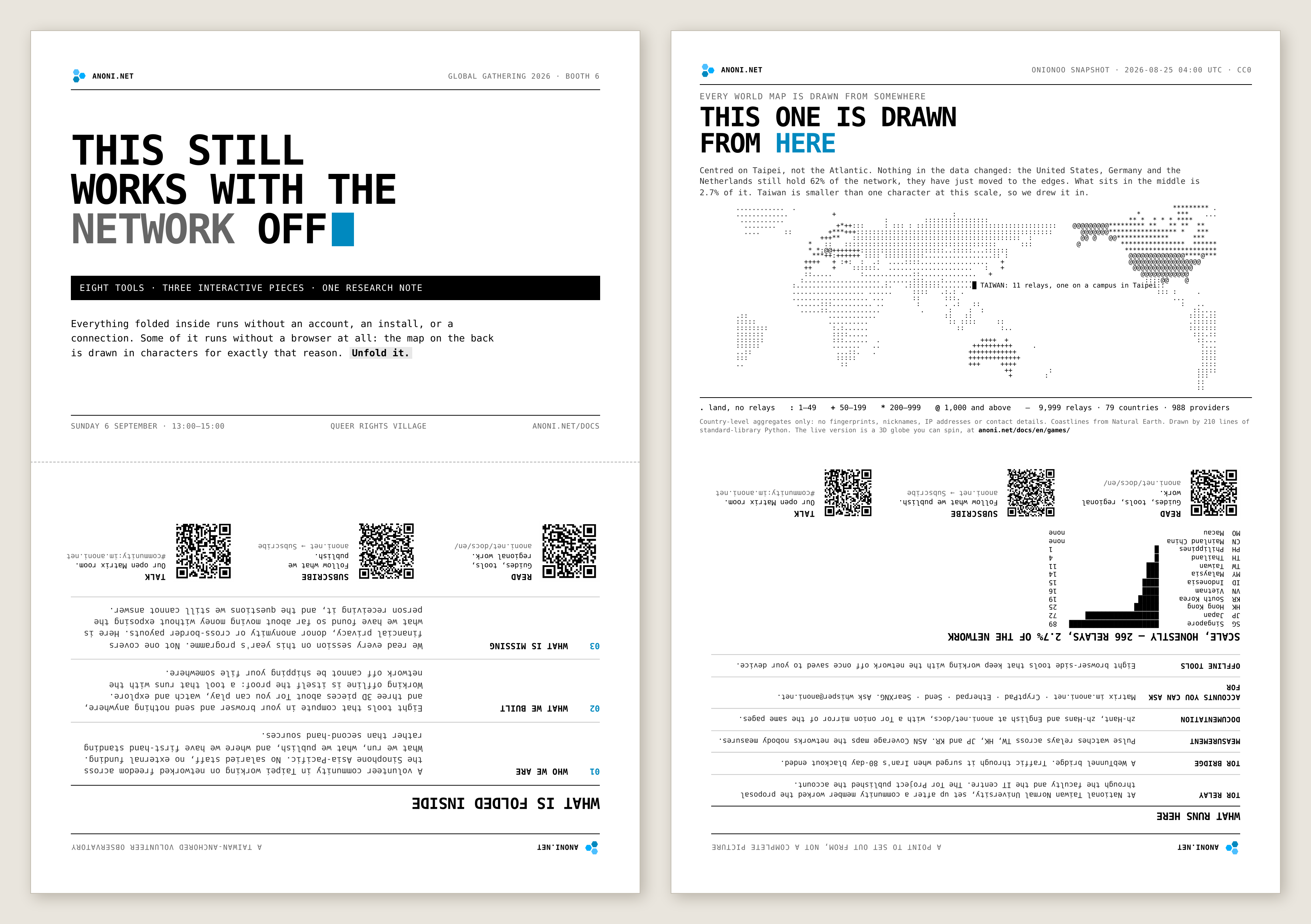
From 4 to 6 September we have a booth at Global Gathering 2026 in Estoril, Portugal, where we hand out a printed zine. Four A4 sheets folded in half inside a wrapper, A5 when folded. We printed 150 copies, they go until they run out, and there is no digital edition.
anoni.net is a volunteer community based in Taiwan, working on documentation, measurement tools, and self-hosted services for anonymity networks and networked freedom.
Booth slot: Sunday 6 September, 13:00 to 15:00
Where: Booth 6
What you can do there: take a zine, try eight browser-side tools that work offline and three interactive 3D pieces about Tor (the onion routing network), discuss anonymous payments
We are around all three days, so stop us anywhere at the venue outside the booth slot
Who the zine is for: anyone working on cross-border disbursement, donor anonymity, or a project blocked by financial controls. One of the sheets is written for you.
This article is the design record, written for people interested in typesetting and print, including the places we got wrong and fixed. For why we are attending, why the booth topic is anonymous payments, which sessions overlap with our work, and five other ways to find us, read anoni.net at Global Gathering 2026. The full event information is in that earlier post.
We are a group of volunteers working on anonymity networks and internet freedom, based in Taiwan. We maintain this documentation site, a practical guide to privacy and anonymity sorted by scenario for everyday life, sensitive work and high risk.
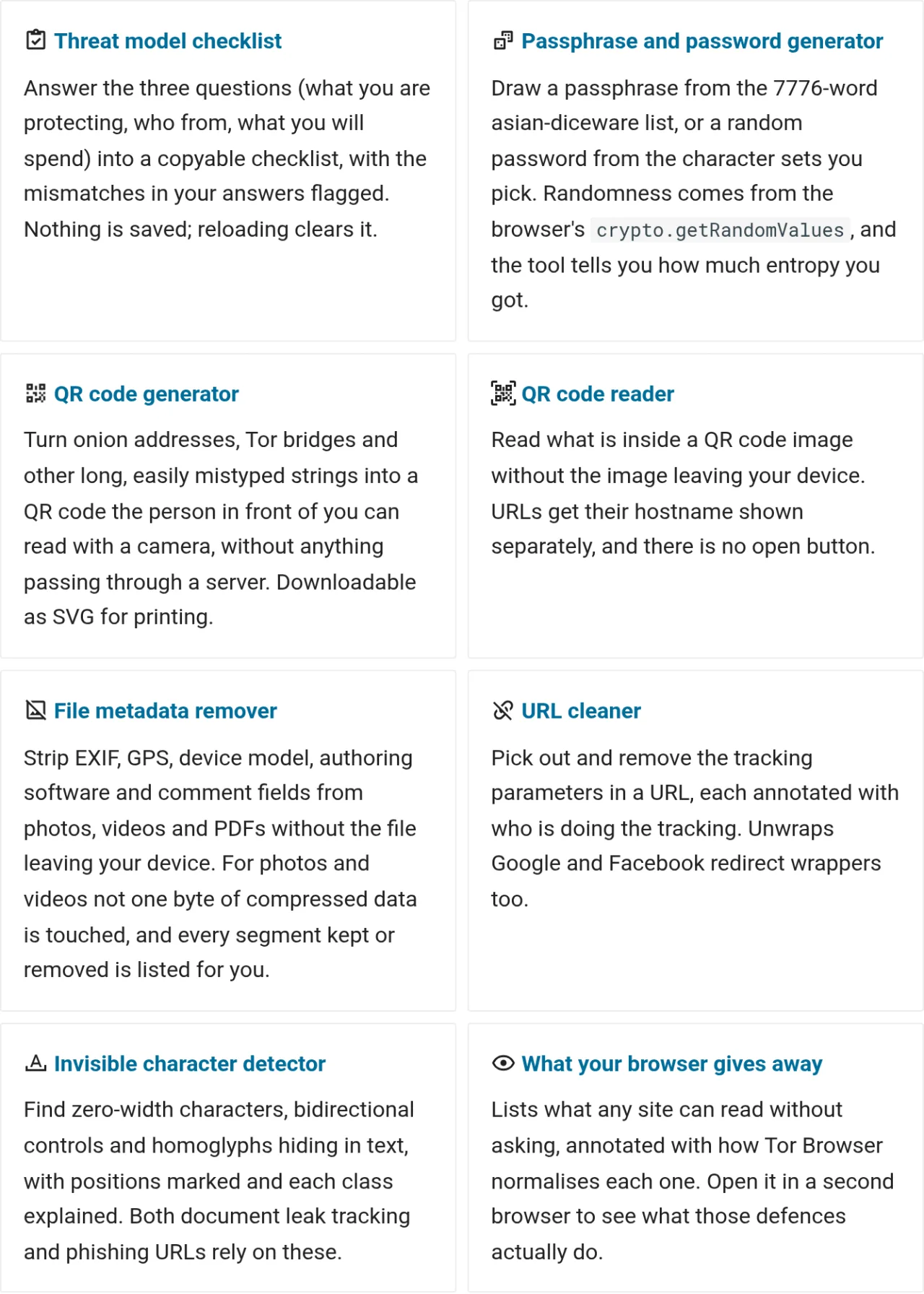
The articles on this site explain how to protect yourself. The tools section holds the things you can actually press. All eight compute in the reader's browser, send nothing anywhere, and keep working with the network off once stored on a device.
Global Gathering 2026, hosted by Team CommUNITY, runs from 4 to 6 September in Estoril, Portugal. We applied for a booth and the slot is now confirmed.
Date and time: 6 September, 13:00 to 15:00 WEST (UTC+1, Portugal local time during the event)
Open a web page and the JavaScript on it can read your graphics card model, its driver details, and the hardware features it supports. Those answers barely change on a given machine, so a tracking company can combine them with other device traits into an identifier that needs no cookie, asks for no consent, and follows you between sites.
The graphics card is one source among many. Font lists, screen dimensions, time zone, and audio processing all feed the same identifier. A browser fingerprint cannot be cleared the way a cookie can covers how the whole mechanism works, why clearing cookies does nothing, and where each browser currently stands. This piece stays with the graphics card.
Brave has handled these signals since version 1.93, on by default on desktop and Android, rolling out in stages1. Three protections ship together: the WebGL vendor and renderer strings become one generic string shared by every Brave user, the WebGPU hardware description fields are cleared, and the list of supported WebGL extensions gets noise added to it.
The first two make every user look alike. The third makes one user look different on every site. Two opposite techniques arrived in the same release, each assigned to a different API, and where that line falls is also where Brave and Tor Browser part company on fingerprinting.
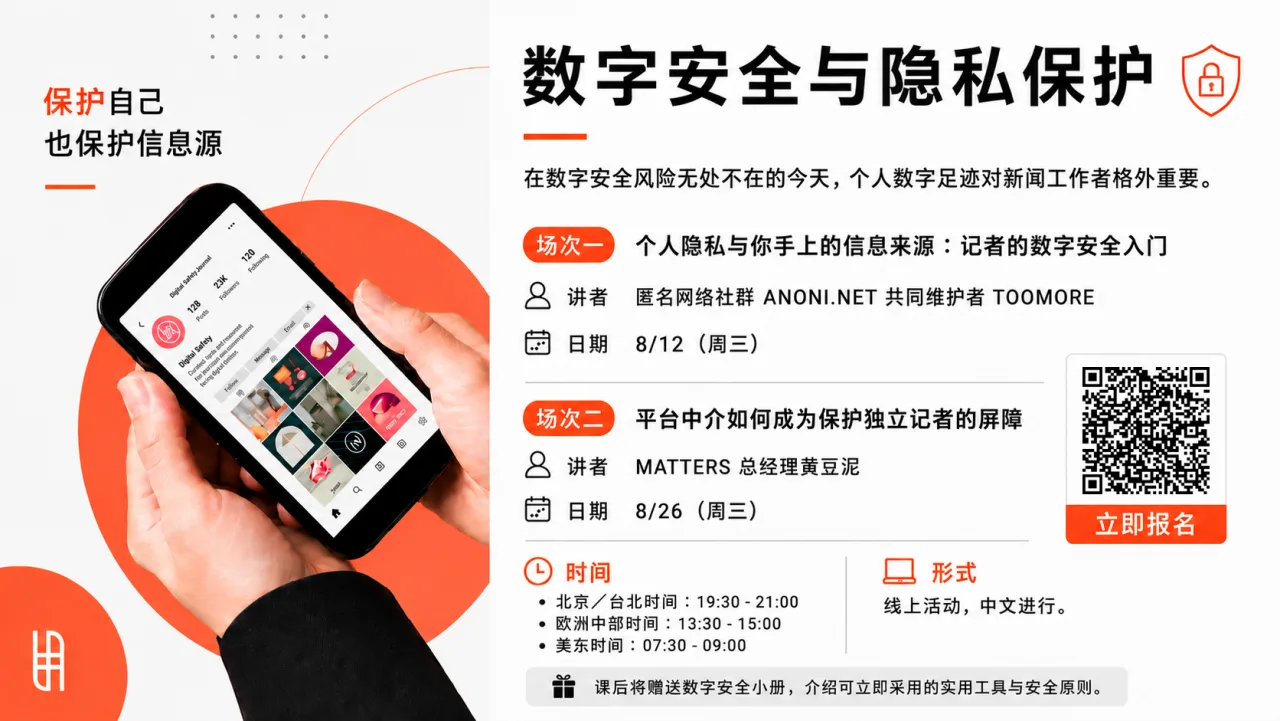
Tian Jian's learning platform TJ Field School is running a two-session series on digital security and privacy. Toomore from our community gave the first session on 12 August, and Mashbean takes the second on 26 August. Registration is still open.